
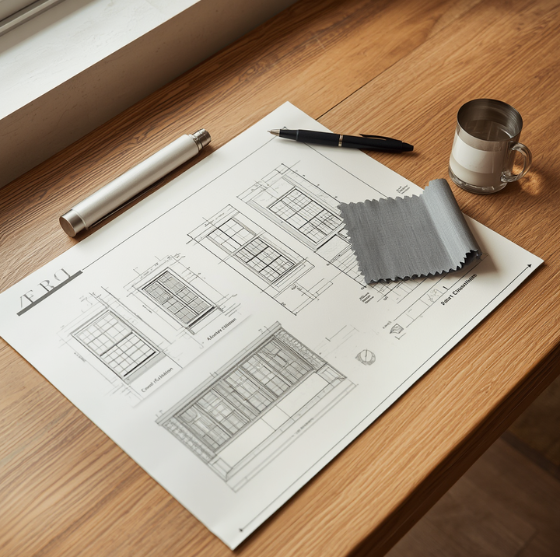
When homeowners collect window quotations, the instinct is to line them up and look at the bottom number. It is the one thing every quote makes easy to compare — and the one thing that tells you the least. A window is not a finished product on a shelf; it is a specification. Two quotes for “aluminium windows” can describe two completely different things at the same price.
Why quotes are so hard to compare
“Aluminium window” is not a spec — it is a category. The real cost drivers sit underneath it: the wall thickness of the profile, whether there is a genuine continuous thermal break, the grade of the glass unit, the quality of the seals and hardware, and whether the whole thing is an engineered system or parts assembled on site. A quote that lists only “aluminium sliding window, powder-coated” is leaving all of that unsaid — and unpriced.
Before comparing prices, get every quote onto the same specification. If you are not sure how to read one, our guide to telling a system window from thermal-break aluminium is the place to start.
What you're actually paying for
It helps to see roughly where the money in a window goes. The frame is only part of it — glass is often just as large a share, and the labour to fit and seal it is very real money.
Glass is quietly half the window
Glass is where a surprising amount of cost — and comfort — lives. Single glazing, double glazing, the coating, the spacer, the laminate for safety and noise: each changes the price meaningfully, and each changes how the room feels. A cheaper quote often achieves its price simply by specifying a thinner, plainer glass unit. You will not see it on paper; you will hear it the first time it rains.
Installation and making good
The window is only half the job. Removing the old frames, preparing the opening, sealing correctly against water, and making good the surrounding wall and finishes all take skilled labour. Some quotes fold this in; others quietly leave it out, so the true figure only appears once work has started.
A quote noticeably cheaper than the others, with a vague specification (“aluminium window”, “tempered glass”, no mention of installation scope). The saving is almost always coming from somewhere you cannot see yet.
The extras that appear later
- Hacking and disposal of existing windows and debris removal.
- Scaffolding or gondola access for higher or hard-to-reach openings.
- Waterproofing and sealant — the right sealant, applied properly, is not where to save.
- Grilles, screens and blinds — added on later at extra cost, unless they are built into the system.
- Permits and professional endorsement where the work requires it.
The cost no quote prints
The most expensive line item is the one no quotation shows: doing it twice. A window that leaks, whistles, or whose hardware seizes within a few years has to be resealed, repaired, or replaced — often after it has already damaged the wall or finishes around it. The saving that looked good on signing day is spent several times over.
The cheapest window and the cheapest quotation are rarely the same thing.
How to compare properly
Put every quotation on the same specification, ask what installation and making-good include, and check the glass and hardware line by line. Then judge the price. A higher number attached to a complete, engineered, warranted system is often the cheaper decision once you count the years you will live with it — and the repairs you will not have to make.
Ask each supplier one question: “What is not included in this price?” The clarity — or vagueness — of the answer tells you as much as the number itself.
Key takeaways
- The bottom-line number is the least comparable part of a window quote — the specification underneath it is everything.
- Glass, seals, hardware and installation are where cheaper quotes quietly cut — and where you feel it later.
- Hacking, disposal, access, waterproofing and add-on screens/blinds are common “extras” that appear after signing.
- The biggest hidden cost is doing the job twice; a complete system at a fair price is often the cheaper decision.