
Few things unsettle a homeowner more than a stain spreading under a window after a storm. In Singapore, where a tropical downpour can arrive sideways on the wind, leaking windows are one of the most common — and most preventable — renovation regrets. The cause is almost never bad luck. It is drainage.
The counter-intuitive truth about leaks
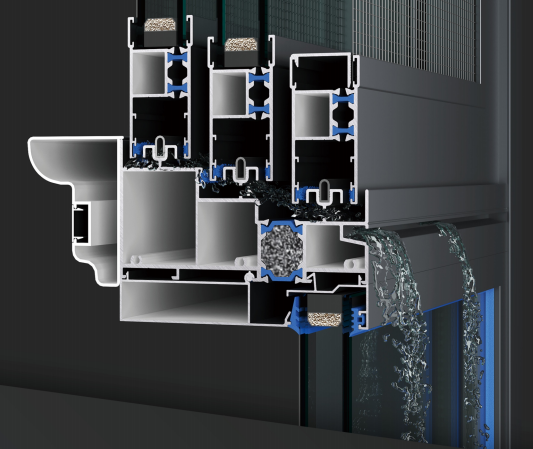
This surprises people: a well-made window does not try to seal water out completely. Wind-driven rain will always push a little moisture past the outer line. The job of the frame is to catch that water and guide it back outside before it ever reaches your wall. A window that relies only on sealing every gap is a window waiting to fail, because seals are exactly what age and shrink over time.
Good windows are designed to manage water, not merely block it. Sealing slows the water down; drainage decides where it goes. You need both — and the second is the one cheaper windows skip.
How engineered drainage works
Inside a system profile is a deliberate path for water. Rain that gets past the outer seal is caught, channelled, and drained back outside through concealed points — a designed sequence rather than a hope that one seal holds.
Pair that path with the triple sealing of a genuine system window, and the frame handles water as an engineered system — not a single line of defence.
Why cheaper windows leak
- Exposed or too-few drain holes that clog, or that let wind push water back inward.
- Flat or poorly sloped channels where water pools instead of draining.
- Single-line sealing — once that one seal ages, there is nothing behind it.
- Loose, screwed corners that open a path straight to the wall.
- Installation gaps where the frame meets the opening, sealed with the wrong material or none at all.
Notice how many of these are the same shortcuts that separate an assembled window from an engineered one. Leaks are rarely a single defect — they are the accumulation of small savings.
Drainage keeps more than water out. Concealed, sloped channels also deny insects and draughts the open holes they would otherwise use — part of why a well-engineered frame simply feels calmer to live behind.
What to check before you buy
Ask to see how the window drains. A good supplier can show you the internal channel and the concealed exit points, and explain the slope. If the answer is a row of holes drilled through the outer frame — or no clear answer at all — you have learned something important. For the full set of on-site checks, see our seven ways to tell a real system window.
Key takeaways
- Windows stay dry by managing water, not by sealing it out completely — seals age, drainage endures.
- Engineered drainage catches water past the outer seal, runs it along a sloped internal channel, and exits it through concealed points.
- Most leaks come from exposed or flat drainage, single-line sealing, or loose corners — the same shortcuts that mark assembled aluminium.
- Ask to see the drainage path before you buy; concealed, sloped channels also keep insects and draughts out.